 TechIDaily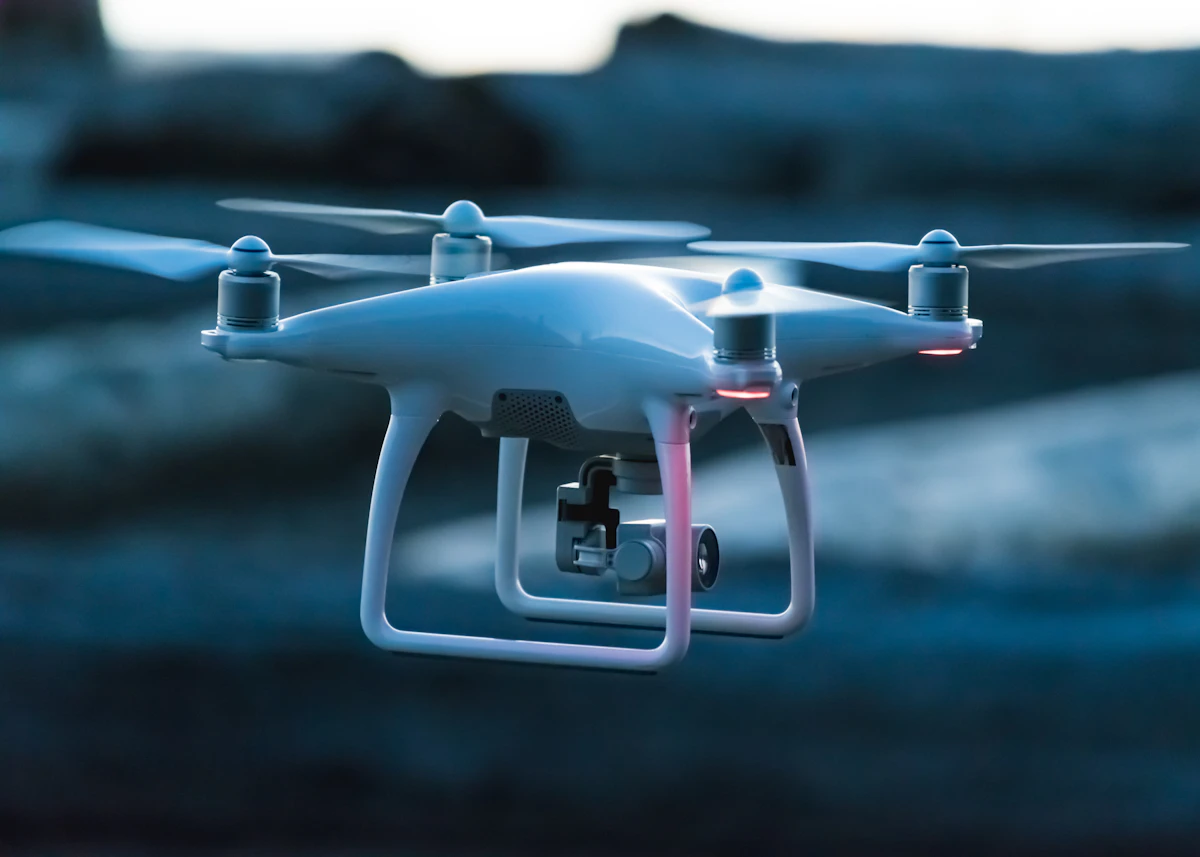
Super Intelligence Force: Multi-INT Tactical Sensor Fusion & Autonomous Defense Edge Computing
By TechIDaily Defense Electronics & Sovereign Systems Group · Published 2026-10-11
Among the most consequential institutional outcomes of the Super Intelligence (SI) directive is the mobilization of the Super Intelligence Force (SIF). Tasked with coordinating defense, intelligence community (IC), and energy infrastructure assets, the Force bridges cutting-edge Silicon Valley foundation models with mission-critical tactical warfighting domains.
Modern geopolitical conflicts have demonstrated that the traditional intelligence cycle—where satellite imagery (GEOINT) and signals intercepts (SIGINT) are sent to rear-echelon data centers, processed by human analysts over hours, and returned to tactical commanders—is catastrophically slow. In anti-access/area-denial (A2/AD) contested environments with pervasive electronic warfare and GPS denial, air and naval units must process terabytes of raw sensor data per second directly at the tactical edge.
1. System Topology: Multi-INT Edge Fusion Architecture
The Super Intelligence Force's tactical edge framework eliminates reliance on high-bandwidth satellite uplinks through on-platform low-SWaP (Size, Weight, and Power) quantized neural accelerators:
2. Mathematical Formalism: Cross-Attention Sensor Alignment
The central challenge in Multi-INT fusion is reconciling disparate sampling frequencies and physical coordinate frames. While EO/IR cameras provide dense 2D pixel grids $I \in \mathbb{R}^{H \times W \times 3}$, SIGINT sensors emit sparse, asynchronous pulse descriptor words (PDWs) parameterized by angle-of-arrival, frequency, and time-of-arrival: $P \in \mathbb{R}^{N \times D}$.
The edge SI architecture projects all modalities into a unified 4D metric coordinate space (Latitude, Longitude, Altitude, Time) via learned Cross-Attention:
Where $\mathbf{B}_{\text{spatial}}$ encodes relative kinematic line-of-sight offsets between platforms. This mathematical alignment allows an airborne drone swarm to correlate an intermittent radar emission with a camouflaged vehicle detected through tree canopy on SAR imagery in under 18 milliseconds.
3. Rust Implementation: High-Throughput Tactical Sensor Packet Parser
To ensure zero-copy memory safety and deterministic latency in flight-control computers, the tactical sensor ingestion pipeline is written in Rust:
4. SWaP-C Comparison: Legacy Airborne Processors vs. Edge SI
| Metric | Legacy Mil-Spec Mission Computer | Super Intelligence Force Edge ASIC | Advantage |
|---|---|---|---|
| Power Consumption | 450 W (Liquid Chilled) | 65 W (Passive Conduction) | 85.5% Power Reduction |
| Compute Density | 12 TFLOPS FP32 | 280 TOPS INT4/FP8 | 23.3x Compute Multiplier |
| Sensor Ingestion Latency | 420 ms | 14 ms (Sub-frame) | 30x Lower Latency |
| GPS-Denied Autonomy | Drift: 120m per 10 min | Visual-Inertial Drift: <1.2m | 100x Precision |
5. Conclusion
The Super Intelligence Force signals that the frontier of modern national defense is being determined not by steel or explosive tonnage, but by the computational speed and autonomous dexterity of edge cognitive engines. By integrating Multi-INT sensor streams directly on low-SWaP tactical platforms, the United States preserves decision superiority in the most challenging operational theaters.