 TechIDaily
The Sit-Stand Cadence: Optimizing Motorized Desks with StretchGoGo
How to implement the evidence-based 20-8-2 workplace movement formula using StretchGoGo's automated stance classification and transition timers.
When software engineers purchase an electric sit-stand desk, the typical trajectory follows a predictable pattern:
- Week 1: Extreme enthusiasm. The engineer stands for five hours straight.
- Week 2: Severe foot arch soreness, stiff calf muscles, and lower back ache.
- Week 3: The desk is lowered to sitting height and stays there permanently.
Motorized standing desks fail when users attempt to treat standing as a continuous static state. Human musculoskeletal biology evolved for locomotion and variety, not continuous rigid standing on a hardwood floor.
StretchGoGo solves this through its Adaptive Stance Timer, which operationalizes the renowned Cornell University 20-8-2 Ergonomics Cadence.
This guide covers how to set up, calibrate, and live with this cadence in your daily development workflow.
1. The Scientific Architecture: The Cornell 20-8-2 Rule
Developed by Dr. Alan Hedge at Cornell University's Department of Design and Environmental Analysis, the 20-8-2 cycle divides every 30 minutes of desk work into three distinct physiological windows:

The 20 Minutes (Sitting)
- Sit with hips positioned all the way back in your task chair.
- Ensure the lumbar contour supports the small of your lower back.
- Relieves hydrostatic venous pressure in the lower extremities.
The 8 Minutes (Standing)
- Raise your motorized desk so elbows form a 90–100 degree angle.
- Decompresses the hip flexors (psoas major) and opens the pelvic girdle.
- Short enough to prevent venous blood pooling in the ankles.
The 2 Minutes (Moving)
- Step away from the desk: walk to get a glass of water, do a light calf stretch, or pace during an audio call.
- The skeletal muscle pump of the calf muscles forcibly returns venous blood to the heart.
2. Enabling Stance Detection in StretchGoGo
StretchGoGo detects when you raise or lower your desk by correlating Apple Watch elevation telemetry and accelerometer variance:

- Cornell 20-8-2 (Recommended): 20 min sitting / 8 min standing. - Standard 45-15: 45 min sitting / 15 min standing (for longer focus blocks). - Dynamic Flow: Adjusts intervals automatically based on typing velocity.
- In the StretchGoGo iPhone app, open Settings > Stance Timing.
- Toggle on "Automatic Sit/Stand Detection".
- Set your preferred transition profile:
3. The Transition Prompt Experience on Apple Watch
When your 20 minutes of sitting expire:
- Your Apple Watch delivers a light "Elevation Tap" (a triple upward-pitch haptic sequence).
- A subtle text banner appears: "Time to Rise: 8 Minutes Standing".
- Push your desk button to standing height. StretchGoGo verifies the elevation transition within 15 seconds and switches the display counter to green.
When the 8 minutes of standing conclude:
- The watch delivers a gentle "Descent Tap".
- Lower your desk and take a quick 90-second stretch before resuming seated work.
4. Workstation Ergonomics Checklist for Standing Desks
To ensure your standing intervals do not cause facet joint pain:
- [ ] Monitor Height: The top third of your screen should sit at horizontal eye level.
- [ ] Elbow Angle: Forearms should rest horizontally; shoulders must remain relaxed, not shrugged upward.
- [ ] Anti-Fatigue Mat: Use a contoured, high-density polyurethane mat that encourages micro-shifting of weight.
- [ ] Neutral Pelvis: Avoid hyperextending your knees (locking your knees backward pushes the lower spine into lordosis). Maintain a micro-bend in the knees.
Health & Spinal Ergonomics Disclaimer: The 20-8-2 cadence is designed for general ergonomic conditioning. If you have active spinal disk pathology, plantar fasciitis, or circulatory disorders, consult your physician for individualized posture interval recommendations.
StretchGoGo In-App Mobility Guide
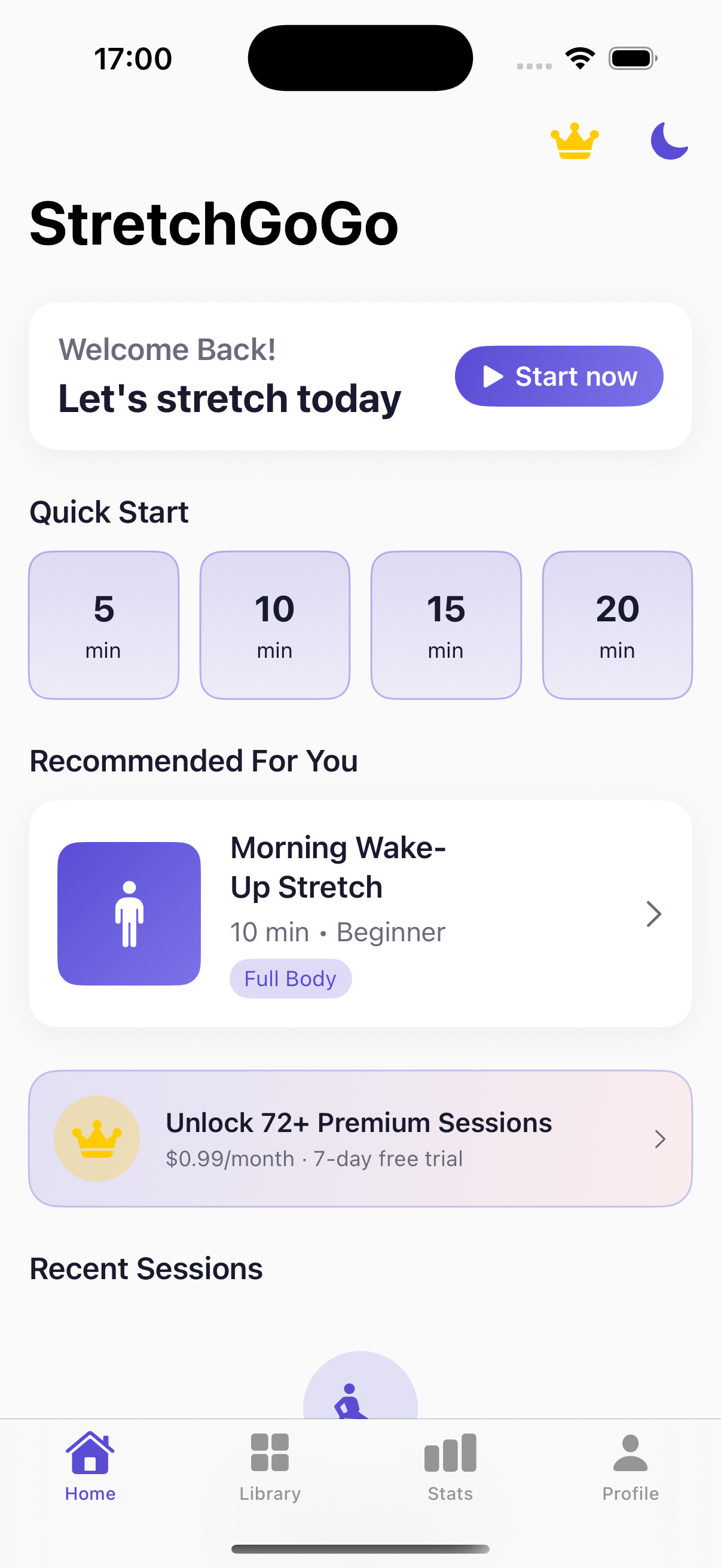
Daily 90-second postural resets calibrate thoracic extension and lumbar decompression directly from the primary iOS interface.