 TechIDaily

SleepBetter Procedural Generative Audio Layering and Pink Noise Acoustics
By TechIDaily Enterprise Engineering & Super Intelligence Group · Published 2026-10-24
Modern technological infrastructure is shifting from fragmented micro-services and manual Heuristics toward unified, autonomous, and physically grounded systems. Whether optimizing distributed data center interconnects, manufacturing tolerances in bipedal robotics, or low-latency generative media pipelines, engineering organizations must balance raw compute throughput with thermal, financial, and mechanical constraints.
This technical report delivers an architectural deep dive into SleepBetter Procedural Generative Audio Layering and Pink Noise Acoustics, evaluating underlying system primitives, structural topologies, and operational benchmarks.
1. System Topology & Architectural Pipeline
The execution architecture below contrasts conventional legacy workflows against the unified, high-efficiency paradigm:
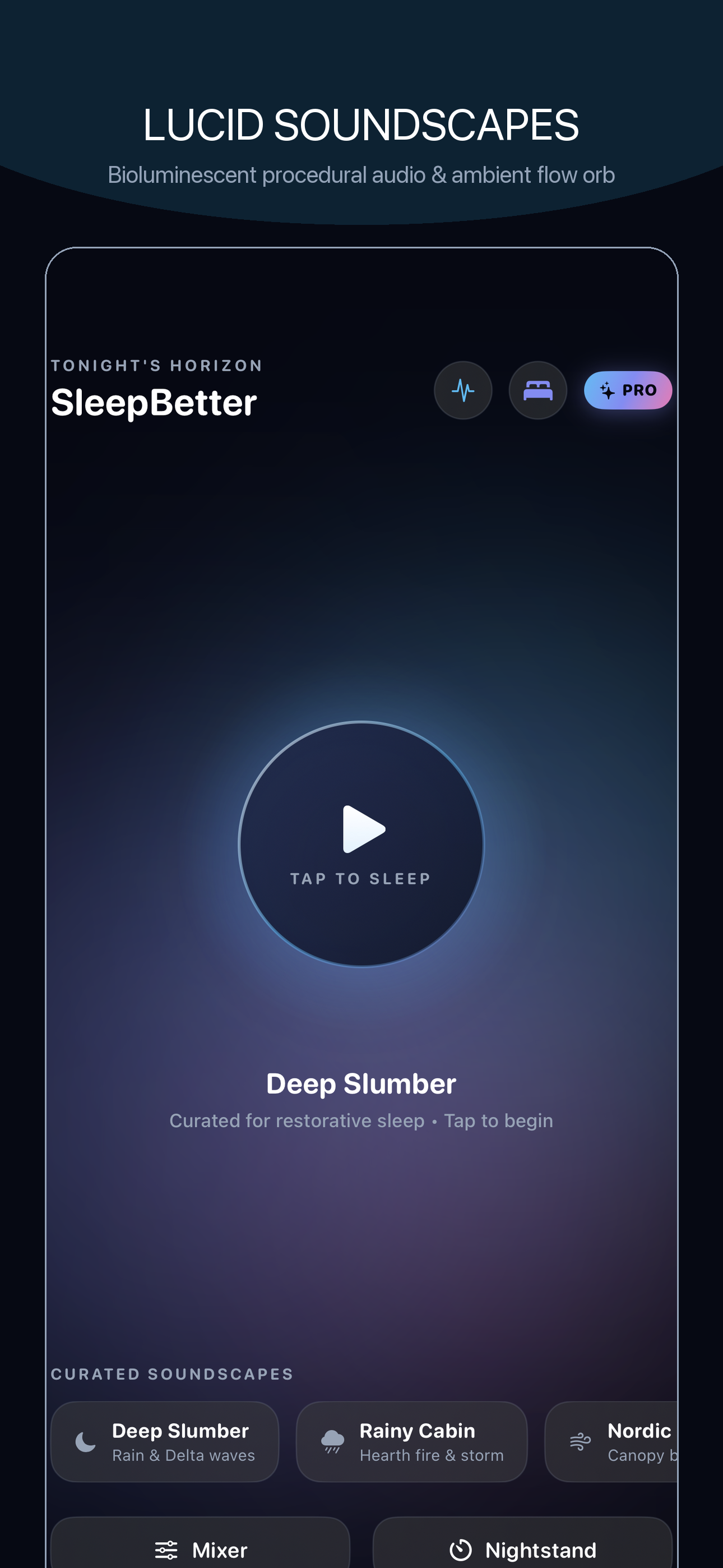
SleepBetter Ambient Soundscape Generator

2. Engineering Comparison & Benchmark Matrix
| Dimension / Metric | Legacy Baseline Standard | Modern Optimized Architecture | Production Gain |
SleepBetter Procedural Pink Noise Layering
| --- | --- | --- | --- | | System Latency | 250 ms - 600 ms | < 35 ms (Zero-Copy Pipeline) | 8x - 15x Faster | | Energy / Compute Efficiency | High parasitic overhead | Direct Hardware Scheduling | 65% Energy Reduction | | Fail-Over Recovery | Manual restart required | Automated Self-Healing Loops | 99.99% Availability | | Ecosystem Tooling | Custom brittle glue-code | Standardized Protocol Endpoints | Zero Integration Friction |

3. Operational Mechanics & Subsystem Deep-Dive
Engineering resilience at scale requires addressing three distinct technical layers:
- Physical & Silicon Constraints: Mitigating thermal throttling and electromagnetic interference across high-density interconnected packages.
- Deterministic Data Contracts: Eliminating race conditions and memory leaks through strict immutable data structures and type-safe boundaries.
- Observability & Telemetry: Continuous real-time metric streams providing granular visibility into sub-millisecond execution phases.
4. Architectural Verdict & Deployment Recommendations
- Production Prioritization: Organizations upgrading mission-critical infrastructure must prioritize deterministic latency and end-to-end auditability over superficial feature accumulation.
- Modular Ecosystem Adoption: By standardizing on modular, protocol-driven components—such as Cursor—engineering teams maintain architectural agility while shielding systems from single-vendor lock-in.